Important news for current (and possibly future?) members of the UK Government
Last week Marine Le Pen was quoted in a major UK national newspaper saying that any attempt by the UK to rejoin the EU would cause France to exercise its veto. In fact, it’s a lot worse than that for this UK Government and all the so-called ‘Rejoiners’, as this report demonstrates.
We reveal a great deal more about a process the Government either seems to be unaware of, or which it prefers not to talk about. In either event, Facts4EU and GB News blow the lid off the whole, demeaning and wearying system. Also, in the same newspaper article referred to above, a named French ‘MEP’ known as ‘Monsieur Frexit’ was quoted at length. This would have been fine if he is actually an MEP, which he is not.
In any event, below we include Monsieur Frexit, who is the economic advisor to Marine Le Pen’s Deputy Leader, Jordan Bardella. If he is happy with this veto threat, then as a ‘Frexiteer’ it shows they’re not saying this out of malice, but a desire to help. Who is to say how many more Eurosceptic countries may help in the same way in the years ahead?
Facts4EU has prepared this report exclusively for GB News. As always, we recommend clicking that link to get their particular take on this important story. We worked in collaboration with The Campaign for an Independent Britain (CIBUK) and Stand for Our Sovereignty (SovereignUK.Org).
‘Rejoiners’ will have to rename themselves as ‘Joiners’
The veto mentioned in the newspaper article doesn’t only concern France. All countries who are members of the EU at the time that the UK makes a formal application to join have the same veto. There is in fact no ‘rejoin’ process anywhere in the EU’s accession mechanisms. It must be remembered that the EU claims to be a “rules-based organisation”.
Readers who are pro-Brexit will be delighted about this. So far, this seems to have been something this UK Government has forgotten – or forgotten to mention.
Here are key sections of what the EU says
(All emboldening by the EU Commission itself)
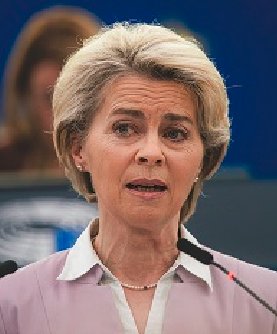
EU Commission President Ursula von der Leyen, addressing the EU Parliament
“Each country that applies to join the EU must fulfil the same strict requirements and follow the same rigorous process to become a Member State.”
“… must submit a membership application to the Council of the EU… Based on the Commission’s recommendations, the Council decides whether to grant the country candidate status and …. All EU Member States must agree on this decision.”
Imagine the ignominy. Rejected before even getting to the first rung of ‘candidate status’. Even countries like Bosnia & Herzegovina and Moldova have that.
“…the candidate country prepares to implement EU laws and standards, also known as the acquis.… the Commission monitors the candidate’s progress on these reforms…”
“If the Commission recommends that the candidate is ready, an accession treaty is prepared.”
“The accession treaty must then be approved by the European Commission, the European Council and the European Parliament before being signed and ratified by all EU Member States and the candidate country.”
Any country feeling particularly cruel towards the UK could delay its objections up to the last minute, letting the UK go through years of torment, and then refuse to sign and ratify. Or the EU Parliament (see below) might just refuse to sign because of something the UK was doing or had done.
Lord (John) Redwood, former Secretary of State commented exclusively to GB News and Facts4EU
“Rejoining the EU would bring us many additional costs and disadvantages we dodged when we were members. As Facts4EU rightly point out we would be made to start again as applicants, and made this time to obey all the worst features. We would not get our rebate on membership charges, which used to save us one quarter of the bill. We would not be given a special opt-out from joining the Euro.
“We would not be allowed to stay outside the Schengen area, forcing us to accept free movement of people from all parts of the EU. We would have to adopt all the new EU laws of the last five years which we had no say on, before being allowed to join. These would damage our innovations in agriculture, pharmaceuticals, digital and other key areas.”
How much does the Starmer Government know about European politics?
While the British were focused on the start of Starmer’s fight for victory in the UK General Election of 2024, the rest of Europe – or rather, 50.7% of the electorate – were more interested in the 10th anniversary of the EU Parliamentary Elections about to take place.
These were held against the backdrop of right-wing or ‘populist‘ parties in Italy (Meloni‘s), Hungary (Orban’s), Sweden and Finland, then in smaller countries such as Slovakia and Croatia.